2026 Guide: Maximize Energy-Efficient Home Improvement Tax Credits
Advertisements
Homeowners can significantly reduce their tax burden in 2026 by leveraging energy efficient tax credits 2026 for qualifying home improvements, potentially saving up to $2,000 through updated federal incentives.
As we approach 2026, homeowners across the United States are presented with a remarkable opportunity to not only enhance their living spaces but also significantly reduce their tax liabilities. The federal government continues to incentivize energy-efficient upgrades, offering substantial tax credits that can translate into thousands of dollars in savings. This guide delves into the specifics of the energy efficient tax credits 2026, outlining how you can maximize your benefits and contribute to a greener future.
Understanding the Energy Efficient Home Improvement Credit
The Energy Efficient Home Improvement Credit, formerly known as the Nonbusiness Energy Property Credit, has been significantly bolstered and extended through 2032. This credit is designed to encourage homeowners to make improvements that reduce their homes’ energy consumption, thereby lowering utility bills and decreasing carbon footprints. For 2026, many of the expanded benefits introduced by recent legislation remain in effect, offering robust financial incentives.
This credit is not a deduction; it directly reduces the amount of tax you owe, dollar for dollar. Understanding its nuances is crucial for maximizing your savings. The credit covers a broad range of qualified energy efficiency improvements and residential clean energy property, each with specific limits and requirements. It’s a key component of federal efforts to promote energy independence and combat climate change, directly benefiting homeowners who choose to invest in their properties’ energy performance.
Key Changes and Updates for 2026
The landscape of energy tax credits has evolved, with recent legislative changes introducing higher credit amounts and broader eligibility. For 2026, homeowners can anticipate a continuation of these enhanced benefits, making it an opportune time for upgrades. These updates are a direct response to the need for greater adoption of sustainable home practices and aim to make such investments more accessible.
- Increased annual credit limit to $1,200 for certain energy-efficient home improvements.
- Separate annual credit limit of $2,000 for qualified heat pumps, heat pump water heaters, and biomass stoves/boilers.
- No lifetime limit on the credit, allowing homeowners to claim it year after year for different improvements.
- Expanded list of eligible improvements, including certain energy audits.
In conclusion, the Energy Efficient Home Improvement Credit for 2026 represents a substantial financial incentive for homeowners. By understanding the updated terms and eligible improvements, you can strategically plan your home upgrades to achieve both energy savings and significant tax reductions.
Eligibility Requirements and Qualifying Improvements
To claim the energy efficient home improvement tax credits in 2026, your home must meet certain criteria. Generally, the credit applies to existing homes and not to newly constructed homes, although some exceptions apply for residential clean energy property. The improvements must be made to your principal residence located in the United States. Rental properties are typically not eligible for this specific credit, but other incentives might apply.
The range of qualifying improvements is extensive, covering everything from insulation to advanced heating and cooling systems. The IRS provides detailed guidance, but generally, these improvements must meet specific energy efficiency standards, often indicated by an ENERGY STAR rating or other certifications. Keeping thorough records of your purchases and installations is paramount for claiming the credit successfully.
Specific Home Upgrades Covered
The credit categorizes improvements into two main types: qualified energy efficiency improvements and residential clean energy property. Each category has distinct credit amounts and requirements. It’s essential to differentiate between them to accurately calculate your potential savings.
- Qualified Energy Efficiency Improvements: This category includes items such as exterior doors, windows, skylights, insulation materials, central air conditioners, furnaces, boilers, water heaters, and main electric panel upgrades.
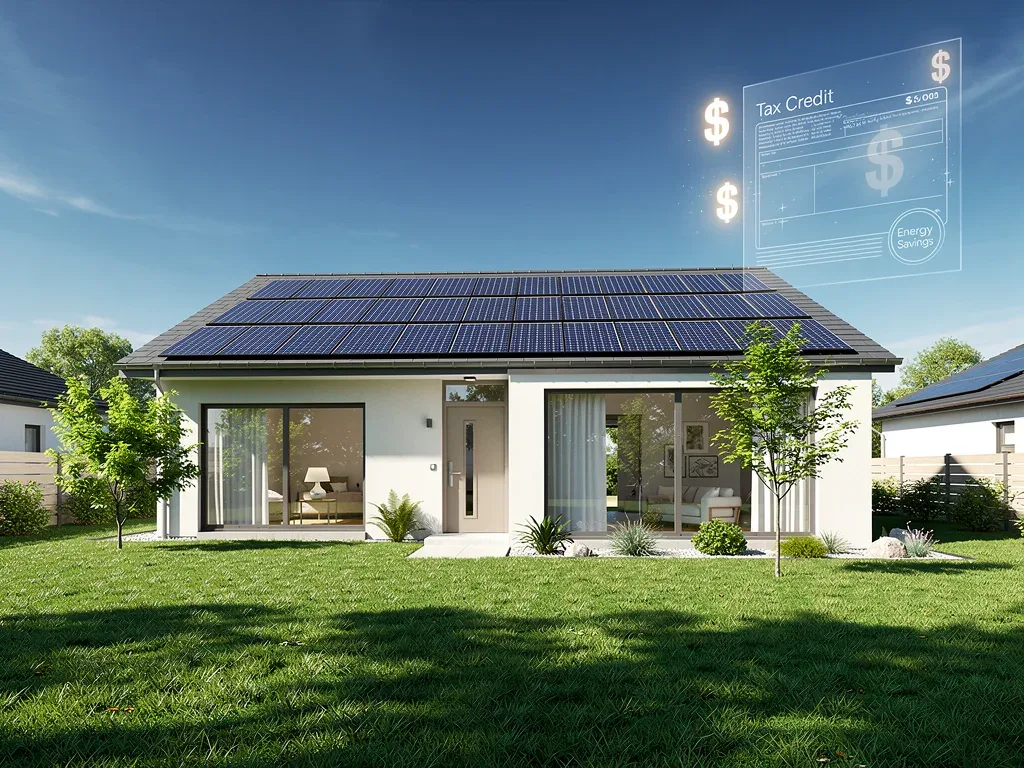
- Residential Clean Energy Property: This covers equipment like solar electric panels, solar water heaters, wind turbines, geothermal heat pumps, and fuel cell property. These generally offer a higher credit percentage with no annual dollar limit, though specific rules apply.
In summary, careful attention to eligibility and the type of improvements you undertake is key. Always consult the latest IRS guidance or a tax professional to ensure your planned upgrades qualify for the 2026 energy efficient tax credits.
Maximizing Your $2,000 Opportunity: Strategic Planning
The $2,000 annual limit for certain improvements, specifically heat pumps, heat pump water heaters, and biomass stoves/boilers, presents a significant opportunity. However, the overall annual limit for other energy efficiency improvements is $1,200, with sub-limits for specific items. Strategic planning is essential to maximize your total savings across different categories and potentially over multiple tax years.
Consider bundling several smaller, eligible improvements within a single tax year to reach the $1,200 general limit, and then separately invest in a high-value item like a heat pump to claim the additional $2,000. Since there’s no lifetime limit on the credit, you can plan larger, multi-year projects. For example, you might install new windows one year and a heat pump the next, claiming credits for both.
Combining Credits and Other Incentives
It’s important to investigate if your state or local government offers additional rebates or incentives for energy-efficient upgrades. These can often be combined with federal tax credits, further reducing your out-of-pocket expenses. Some utility companies also provide rebates for specific energy-saving appliances or installations. Always check for compatibility between federal, state, local, and utility programs.
For instance, while you cannot claim the federal tax credit for the same expense twice, you can often use a state rebate to cover part of the cost, and then claim the federal credit on the remaining, un-rebated portion. This stacking of incentives can lead to substantial overall savings, making these energy-efficient investments even more attractive. Consult with a tax advisor to navigate the complexities of combining various incentives effectively.
Ultimately, maximizing your $2,000 opportunity involves not just knowing what qualifies, but also strategically timing your projects and exploring all available avenues for financial assistance. A well-thought-out plan can turn a significant investment into a highly cost-effective home upgrade.
Documentation and Filing for the Credit
Proper documentation is paramount when claiming the energy efficient tax credits in 2026. The IRS requires proof of purchase and installation for all qualifying improvements. This includes receipts, invoices, and any manufacturer’s certifications that attest to the energy efficiency of the products installed. Without adequate records, your claim could be denied or delayed.

Keep a dedicated file for all your energy-efficient home improvement documents. This should include not only the purchase receipts but also contractor invoices detailing the work performed and the cost of eligible components. For items like windows or insulation, retain any labels or manufacturer’s statements indicating their U-factor, R-value, or other relevant energy performance metrics.
Form 5695: Residential Energy Credits
To claim the credit, you will need to file Form 5695, Residential Energy Credits, with your federal income tax return. This form is used to calculate and report both the Nonbusiness Energy Property Credit (now the Energy Efficient Home Improvement Credit) and the Residential Clean Energy Credit. The form guides you through the process of listing your qualified expenses and determining your eligible credit amount.
- Complete all sections of Form 5695 accurately.
- Attach the form to your Form 1040.
- Consult the IRS instructions for Form 5695 for detailed guidance.
- Consider using tax software or a tax professional for complex situations.
In conclusion, meticulous record-keeping and correct tax form submission are critical steps in securing your energy efficient home improvement tax credits. Don’t underestimate the importance of these administrative tasks, as they directly impact your ability to receive the financial benefits you’re entitled to.
Common Misconceptions and Avoiding Pitfalls
Navigating tax credits can be complex, and the energy efficient home improvement credits are no exception. Several common misconceptions can lead to errors or missed opportunities. One frequent misunderstanding is confusing the Energy Efficient Home Improvement Credit with the Residential Clean Energy Credit; while related, they have distinct rules and limits. Another pitfall is failing to verify if a product truly meets the efficiency standards required by the IRS.
Homeowners often assume that any energy-saving upgrade automatically qualifies for a credit. However, specific performance criteria must be met. For example, windows must have a certain U-factor and Solar Heat Gain Coefficient (SHGC) to be eligible. Always check the manufacturer’s certification statement or the product’s specifications against the IRS requirements before making a purchase.
Ensuring Product Certification and Contractor Expertise
Choosing certified products and reputable contractors is crucial. Many eligible products will have an ENERGY STAR label, making identification easier. For installations, ensure your contractor is knowledgeable about the specific requirements for tax credits and can provide the necessary documentation. A professional can also advise on the best products for your home that meet both your needs and the credit’s criteria.
- Verify ENERGY STAR or other relevant certifications for products.
- Request manufacturer’s certification statements for eligible items.
- Choose licensed and experienced contractors familiar with energy-efficient installations.
- Obtain detailed invoices that clearly separate costs of eligible improvements.
In summary, a proactive approach to research and due diligence can prevent many common pitfalls. By understanding the specific requirements and working with qualified professionals, you can confidently claim your energy efficient tax credits and avoid unnecessary complications.
Future Outlook: Beyond 2026 and Long-Term Benefits
The current framework for energy efficient home improvement tax credits is set to continue through 2032, providing a stable long-term incentive for homeowners. This extended timeline allows for more comprehensive planning of home energy upgrades, enabling homeowners to spread investments over several years and maximize annual credit limits. The stability of these credits signals a strong federal commitment to promoting sustainable living and reducing national energy consumption.
Beyond the immediate financial savings, investing in energy-efficient home improvements offers numerous long-term benefits. These upgrades not only reduce your monthly utility bills but also increase your home’s overall value. Energy-efficient homes are increasingly attractive to buyers, often commanding higher resale prices and selling more quickly in the market. They also contribute to a more comfortable indoor environment, with better temperature control and reduced drafts.
Environmental and Economic Impact
The collective impact of homeowners investing in energy-efficient upgrades extends far beyond individual savings. These actions contribute significantly to reducing greenhouse gas emissions, lessening the strain on national power grids, and fostering energy independence. The growth of the energy efficiency sector also stimulates local economies, creating jobs in manufacturing, installation, and related services.
- Reduced carbon footprint and environmental benefits.
- Increased home value and marketability.
- Improved indoor comfort and air quality.
- Contribution to national energy security and economic growth.
In conclusion, the energy efficient tax credits available in 2026 and beyond are more than just a temporary financial perk. They are an investment in your home’s future, your personal finances, and the broader environmental and economic well-being of the nation. Embracing these opportunities is a smart financial and ecological decision for any homeowner.
| Key Point | Brief Description |
|---|---|
| $2,000 Credit Limit | Annual maximum for specific items like heat pumps and biomass stoves/boilers. |
| $1,200 General Credit | Annual maximum for other energy-efficient home improvements like windows and insulation. |
| No Lifetime Limit | Homeowners can claim credits annually through 2032 for different improvements. |
| Documentation is Key | Retain receipts, invoices, and certifications for all eligible products and installations. |
Frequently asked questions about energy efficient tax credits
What is the primary benefit of the energy efficient home improvement credit in 2026?▼The primary benefit is a direct reduction in your federal income tax liability, dollar-for-dollar, for qualifying energy-efficient home upgrades. This can lead to significant savings, potentially up to $2,000 for certain major improvements like heat pumps, and $1,200 for other upgrades.
Are new construction homes eligible for these tax credits?▼Generally, the Energy Efficient Home Improvement Credit applies to existing homes that serve as your principal residence. However, the Residential Clean Energy Credit, which covers items like solar panels, can apply to both existing and newly constructed homes, provided they meet specific criteria.
Can I claim the credit for multiple improvements in the same year?▼Yes, you can claim the credit for multiple improvements in the same year, subject to the annual limits. There’s a $1,200 annual limit for most energy efficiency upgrades and a separate $2,000 annual limit for specific items like heat pumps, allowing for strategic planning.
What kind of documentation do I need to keep for the credit?▼You should retain all receipts, invoices, and manufacturer’s certification statements that confirm the energy efficiency of the products and the cost of installation. These documents are crucial for substantiating your claim if audited by the IRS.
Do state or local rebates affect my federal tax credit?▼State or local rebates generally do not reduce the amount of your federal tax credit, as long as the federal credit is calculated on the net cost after the rebate. This means you can often combine these incentives to maximize your overall savings on energy-efficient improvements.
Conclusion
The 2026 energy efficient tax credits offer an exceptional opportunity for homeowners to invest in their properties while simultaneously enjoying significant financial benefits. By understanding the nuances of the Energy Efficient Home Improvement Credit and the Residential Clean Energy Credit, strategically planning your upgrades, and maintaining diligent records, you can unlock up to $2,000 or more in tax savings. These incentives not only make energy-efficient living more affordable but also contribute to a sustainable future, enhancing home value, reducing utility costs, and positively impacting the environment. Embracing these federal programs is a smart financial and ecological decision for any homeowner.