2026 Federal Budget: Tech R&D Funding Financial Impact
Advertisements
The 2026 Federal Budget significantly shapes technology R&D funding, directing substantial financial resources towards critical sectors, influencing innovation landscapes, and impacting long-term economic competitiveness across the United States.
Understanding how the new 2026 Federal Budget impacts technology R&D funding (financial impact) is crucial for innovators, businesses, and economic policymakers alike. This budget delineates the financial pathways that will either accelerate or constrain technological progress in the United States, setting the stage for future advancements and global competitiveness. Let’s delve into the specifics and explore the far-reaching implications.
Overview of the 2026 Federal Budget’s Tech R&D Priorities
The 2026 Federal Budget outlines a strategic vision for national technological advancement, prioritizing areas deemed critical for economic security and global leadership. This isn’t merely about allocating funds; it’s about shaping the direction of innovation for years to come. The budget reflects a concerted effort to bolster sectors that promise high returns in terms of economic growth, job creation, and national defense.
Key among these priorities are artificial intelligence, quantum computing, advanced manufacturing, and renewable energy technologies. The administration’s approach suggests a recognition of the rapid pace of technological evolution and the necessity for robust, sustained investment to maintain the nation’s competitive edge. The financial commitment in these areas is expected to catalyze both fundamental research and applied development.
Strategic Allocations for Emerging Technologies
The budget’s detailed allocations reveal a clear focus on several emerging technological fronts. These investments are designed to foster breakthroughs and facilitate the transition of laboratory discoveries into market-ready products and services.
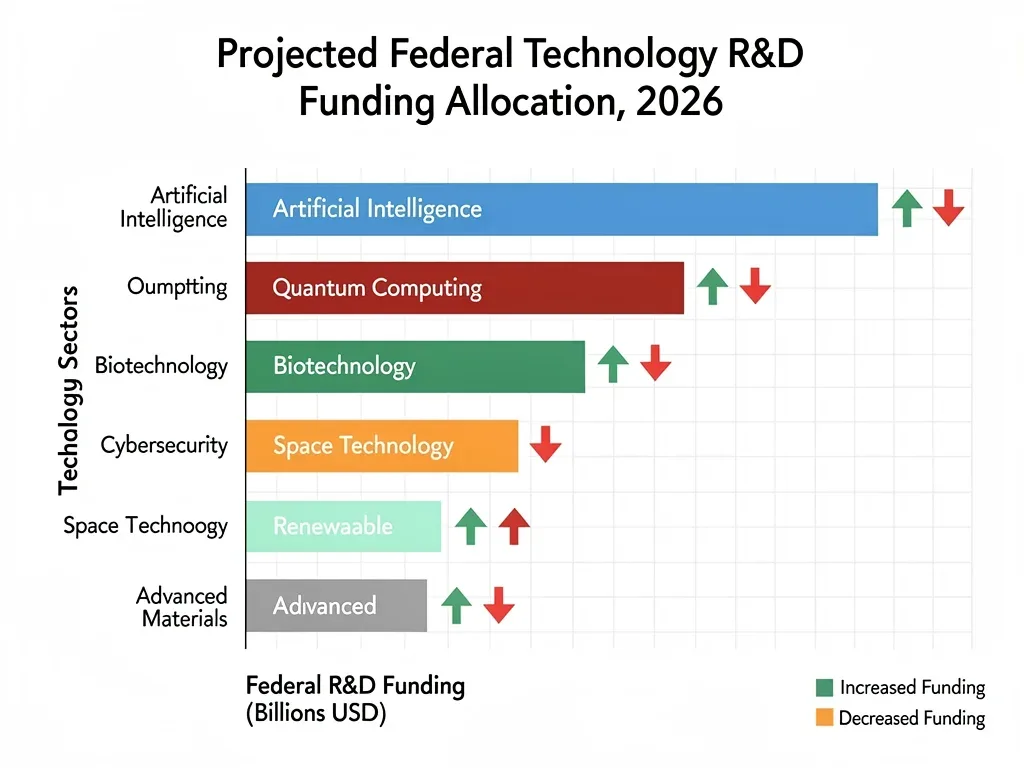
- Artificial Intelligence (AI): Significant increases are earmarked for AI research across defense, healthcare, and infrastructure, emphasizing ethical AI development and robust data security.
- Quantum Computing: Funding is directed towards accelerating the development of quantum hardware and software, aiming to secure a leadership position in this transformative field.
- Advanced Manufacturing: Investments support initiatives to modernize manufacturing processes, integrate automation, and reduce reliance on foreign supply chains.
- Biotechnology and Genomics: Enhanced funding targets breakthroughs in medical research, personalized medicine, and agricultural innovation, promising significant societal benefits.
In essence, the overview of the 2026 Federal Budget’s tech R&D priorities underscores a commitment to fostering innovation through targeted financial support. This comprehensive strategy seeks to ensure that the United States remains at the forefront of technological progress, driving both economic prosperity and national security.
Direct Financial Allocations for Key Research Areas
The direct financial allocations within the 2026 Federal Budget are the tangible expressions of the government’s commitment to technology R&D. These funds are distributed across various federal agencies, each playing a crucial role in advancing specific scientific and technological domains. Understanding these allocations provides insight into where the most significant impacts are expected.
Agencies such as the National Science Foundation (NSF), the National Institutes of Health (NIH), the Department of Energy (DOE), and the Department of Defense (DoD) are slated to receive substantial portions of the R&D budget. Each agency has specific mandates that guide their funding decisions, ensuring a diverse yet coordinated approach to national innovation goals.
Increased Funding for AI and Quantum Science
The emphasis on AI and quantum science is particularly notable. The budget reflects a clear understanding that these fields are foundational for future economic and military superiority. The financial injections are not just for basic research but also for developing the necessary infrastructure and workforce.
- National Science Foundation (NSF): Expected to see a considerable boost to support fundamental AI research, including machine learning, computer vision, and natural language processing.
- Department of Energy (DOE): Allocations will fund quantum computing initiatives, focusing on developing new algorithms and robust quantum systems for complex problem-solving.
- Department of Defense (DoD): Significant investments are planned for AI applications in defense systems, cybersecurity, and intelligence analysis, aiming for enhanced national security capabilities.
These direct financial allocations are designed to create a ripple effect, stimulating private sector investment and fostering a vibrant ecosystem of innovation. The goal is to translate scientific discoveries into practical applications that benefit society and strengthen the nation’s economic foundation. The careful distribution of these funds across various agencies ensures a broad yet focused approach to advancing critical research areas.
Impact on Private Sector Innovation and Investment
The financial impact of the 2026 Federal Budget on technology R&D funding extends far beyond government laboratories and university campuses; it significantly influences private sector innovation and investment. Federal funding often acts as a catalyst, de-risking early-stage research and development, which then encourages private companies to commit their own capital to promising technologies. This symbiotic relationship is vital for a thriving innovation economy.
When the government invests in foundational research, it creates a fertile ground for startups and established corporations to build upon. This can lead to new product development, market expansion, and the creation of entirely new industries. The budget’s focus on specific tech areas signals to the private sector where future growth opportunities lie, guiding their strategic investments.
Stimulating Venture Capital and Startup Growth
Government R&D funding often has a direct correlation with venture capital activity. When federal agencies invest in emerging technologies, it provides a stamp of approval and proof of concept that attracts private investors. This can be particularly impactful for high-risk, high-reward ventures.
- De-risking Early-Stage Research: Federal grants and contracts help reduce the financial burden and risk associated with initial research phases, making projects more attractive to private investors.
- Creating Market Signals: Government investment in specific technologies, like clean energy or advanced materials, signals future market demand and regulatory support, encouraging private sector entry.
- Fostering Public-Private Partnerships: The budget promotes collaborative efforts between federal agencies, universities, and private companies, accelerating technology transfer and commercialization.
Ultimately, the federal budget’s financial commitments serve as a powerful engine for private sector innovation. By providing crucial seed funding and strategic direction, it cultivates an environment where businesses are more willing to invest in cutting-edge research, leading to a robust pipeline of new technologies and economic opportunities.
Regional Economic Implications and Job Creation
The financial impact of the 2026 Federal Budget on technology R&D funding extends deeply into regional economies, fostering job creation and stimulating local growth across the United States. Federal investments are not evenly distributed; they often concentrate in existing innovation hubs or create new ones, leading to significant economic shifts and opportunities in specific geographic areas.
Areas with strong university research programs, established tech industries, or defense contractors often become beneficiaries of increased R&D funding. This influx of capital supports high-skill job creation, from scientists and engineers to technicians and support staff. The economic multiplier effect means that every dollar invested in R&D can generate several dollars in broader economic activity, benefiting local communities.
Growth in Tech Hubs and Emerging Innovation Districts
The budget is expected to bolster established tech hubs while also catalyzing the growth of emerging innovation districts. These districts often form around universities or federal labs, attracting talent and private investment.
- Increased Demand for Skilled Labor: More funding translates to a greater need for STEM professionals, leading to higher wages and more opportunities in R&D-intensive sectors.
- Local Business Development: Research projects often require support services, equipment, and infrastructure, benefiting local businesses and stimulating regional economies.
- Attraction of Talent and Investment: Regions receiving significant R&D funding become magnets for both skilled workers and venture capital, further accelerating economic growth.
In conclusion, the 2026 Federal Budget’s R&D allocations are poised to have a profound regional economic impact, driving job creation and fostering vibrant innovation ecosystems. This strategic investment aims to ensure that the benefits of technological advancement are distributed across the nation, strengthening the overall economic fabric.
Challenges and Opportunities in Funding Implementation
Implementing the financial aspects of the 2026 Federal Budget for technology R&D presents both significant challenges and substantial opportunities. The effective deployment of these funds requires careful planning, oversight, and adaptability to ensure that the investments yield their intended results. Bureaucratic hurdles, competition for resources, and the need for rapid technological adaptation are constant considerations.
One of the primary challenges lies in translating broad budgetary goals into actionable research programs that can deliver tangible outcomes. This involves navigating complex grant application processes, ensuring equitable distribution of funds, and monitoring project progress. However, these challenges also open doors for streamlined processes, innovative partnership models, and a more agile approach to federal funding.
Overcoming Bureaucracy and Fostering Collaboration
The sheer scale of federal funding can sometimes lead to bureaucratic inefficiencies. Addressing these issues is crucial for maximizing the impact of R&D investments.
- Streamlined Grant Processes: Opportunities exist to simplify application procedures and accelerate funding decisions, making it easier for researchers and companies to access capital.
- Enhanced Inter-agency Coordination: Greater collaboration between federal agencies can prevent duplication of effort and ensure a more cohesive national R&D strategy.
- Public-Private Dialogue: Continuous dialogue between government, academia, and industry can help align research priorities with market needs and accelerate technology transfer.
The opportunities arising from these challenges include the potential to create a more efficient and responsive funding ecosystem. By addressing implementation hurdles, the government can ensure that the 2026 Federal Budget’s R&D funding translates into groundbreaking innovations and sustained economic growth, reinforcing the nation’s technological leadership.
Long-Term Economic Competitiveness and Global Standing
The financial impact of the 2026 Federal Budget on technology R&D funding is inextricably linked to the United States’ long-term economic competitiveness and global standing. Strategic investments in science and technology are not just about short-term gains; they are about securing a prosperous future and maintaining leadership in a rapidly evolving global landscape. Nations that consistently invest in R&D tend to experience higher productivity, stronger economic growth, and greater resilience to economic shocks.
By prioritizing key technological domains, the budget aims to ensure that the U.S. remains at the forefront of innovation, attracting top talent and capital from around the world. This sustained investment is critical for developing next-generation industries, creating high-value jobs, and addressing pressing societal challenges, from climate change to public health crises. It’s a proactive approach to shaping the future rather than reacting to it.

Securing Future Industries and Talent
The budget’s R&D focus is designed to cultivate future industries and ensure a robust pipeline of skilled workers, essential for long-term competitiveness.
- Innovation Ecosystem Strengthening: Funding supports an ecosystem where ideas can flourish, from basic research to commercialization, strengthening the entire innovation chain.
- Attraction of Global Talent: A strong R&D environment makes the U.S. an attractive destination for top scientists, engineers, and entrepreneurs from across the globe.
- Leadership in Critical Technologies: Investments in areas like AI, quantum computing, and biotechnology aim to establish U.S. dominance, influencing global standards and markets.
In summary, the 2026 Federal Budget’s financial commitment to technology R&D is a strategic imperative for the United States. It is a vital component of a comprehensive strategy to bolster economic competitiveness, enhance national security, and solidify the nation’s position as a global leader in innovation for decades to come.
Ethical Considerations and Responsible Innovation
As the 2026 Federal Budget allocates substantial funding to technology R&D, it becomes imperative to integrate ethical considerations and promote responsible innovation. Financial investments in advanced technologies, while promising immense benefits, also carry potential risks and societal implications that must be proactively addressed. This includes issues related to privacy, bias in AI algorithms, environmental impact, and the equitable distribution of technological benefits.
The budget implicitly, and in some cases explicitly, acknowledges the need for ethical guidelines and oversight in research. Funding decisions are increasingly influenced by the potential for technologies to be developed and used in ways that align with societal values and human well-being. This shift towards responsible innovation ensures that progress is not only rapid but also sustainable and just.
Ensuring Equity and Mitigating Risks
Responsible innovation requires a multi-faceted approach, focusing on fairness, transparency, and accountability in technology development.
- Ethical AI Development: Funding prioritizes research into bias detection and mitigation in AI systems, ensuring fairness and preventing discrimination.
- Privacy by Design: Investments support technologies that embed privacy protections from the outset, safeguarding personal data in an increasingly connected world.
- Environmental Sustainability: R&D in areas like clean energy and sustainable manufacturing is encouraged, minimizing the ecological footprint of technological progress.
- Inclusive Access: Initiatives aim to ensure that the benefits of new technologies are accessible to all segments of society, reducing digital divides and promoting equitable opportunities.
The integration of ethical considerations into the 2026 Federal Budget’s R&D funding strategy is crucial for building public trust and ensuring that technological advancements serve the greater good. By fostering responsible innovation, the budget helps to guide the development of technologies that are not only powerful but also just and beneficial for all.
| Key Impact Area | Brief Description |
|---|---|
| Increased AI & Quantum Funding | Significant financial boosts for AI research and quantum computing initiatives across federal agencies like NSF and DOE. |
| Private Sector Catalyst | Federal R&D de-risks early-stage tech, encouraging venture capital and corporate investment in emerging fields. |
| Regional Job Growth | Concentrated funding in tech hubs and innovation districts drives high-skill job creation and local economic development. |
| Global Competitiveness | Strategic R&D investments aim to secure U.S. leadership in critical technologies and enhance long-term economic standing. |
Frequently Asked Questions About 2026 Tech R&D Funding
Which technology sectors receive the most significant funding in the 2026 Federal Budget?▼The 2026 Federal Budget prioritizes artificial intelligence (AI), quantum computing, advanced manufacturing, and renewable energy technologies. These sectors are seen as crucial for national security, economic growth, and maintaining global competitiveness, receiving substantial financial allocations.
How does federal R&D funding influence private sector investment?▼Federal R&D funding often de-risks early-stage research, making promising technologies more attractive to private investors and venture capitalists. It signals market opportunities and encourages public-private partnerships, accelerating commercialization and innovation.
What are the regional economic impacts of these R&D investments?▼R&D investments lead to significant regional job creation, especially in tech hubs and areas with strong research institutions. They stimulate local economies by increasing demand for skilled labor, supporting local businesses, and attracting further talent and capital.
Are there ethical considerations integrated into the funding decisions?▼Yes, the budget emphasizes responsible innovation, integrating ethical considerations such as privacy by design, bias mitigation in AI, environmental sustainability, and inclusive access to technology. This ensures that technological progress aligns with societal values.
How does this budget impact the U.S.’s long-term global competitiveness?▼Strategic R&D funding is vital for maintaining U.S. leadership in critical technologies, fostering future industries, and attracting global talent. It strengthens the nation’s innovation ecosystem, securing a competitive edge and enhancing global standing for decades to come.
Conclusion
The 2026 Federal Budget represents a pivotal moment for technology R&D funding in the United States, with its financial allocations poised to shape the nation’s innovation landscape for years to come. By strategically investing in critical areas such as AI, quantum computing, and advanced manufacturing, the budget aims to not only accelerate technological breakthroughs but also to bolster economic competitiveness, create high-value jobs, and ensure the U.S. remains a global leader in science and technology. While challenges in implementation exist, the opportunities for transformative growth and responsible innovation are immense. This comprehensive financial commitment underscores a forward-looking strategy designed to secure a prosperous and technologically advanced future for all Americans.