FICO Score 10 T Update: Impact on Your Credit by 2026

Advertisements
The 2026 FICO Score 10 T update introduces significant changes to credit scoring, potentially shifting individual scores by up to 15 points, primarily by re-weighting trended data and focusing on long-term financial behaviors.
Are you ready for the next big shift in how your financial reliability is judged? The impending 2026 FICO Score 10 T Update: How New Weightings Could Impact Your Score by 15 Points is set to redefine credit evaluation, potentially altering your score by a noticeable margin.
understanding the evolution of FICO scores
FICO scores have long been the cornerstone of credit assessment in the United States, guiding lenders in their decisions about loans, mortgages, and credit cards. However, these models are not static; they evolve to better reflect consumer financial behavior and adapt to economic changes. Each new version aims to offer a more precise and predictive measure of credit risk, ensuring that the system remains relevant and fair.
The progression from earlier FICO models to the upcoming FICO Score 10 T represents a continuous effort to refine algorithms. These updates are driven by extensive data analysis and a desire to incorporate more nuanced aspects of financial history. Understanding this evolution is crucial for consumers, as it directly influences their financial opportunities and responsibilities.
the significance of trended data
One of the most significant advancements seen in recent FICO models, and particularly emphasized in FICO Score 10 T, is the incorporation of trended data. Unlike previous models that primarily captured a snapshot of your credit at a given moment, trended data examines your financial behavior over a longer period, typically 24 months or more. This includes:
- how consistently you pay your bills on time.
- whether your credit card balances are trending up or down.
- your overall credit utilization patterns over time.
This deeper dive into historical patterns provides a more comprehensive view of your financial habits. It helps differentiate between someone who occasionally carries a high balance but consistently pays it down, versus someone whose balances are perpetually increasing.
why FICO scores change
FICO scores change for several reasons, primarily to enhance their predictive power. As economic conditions shift and consumer spending and borrowing habits evolve, FICO adjusts its models to ensure they accurately forecast the likelihood of future default. These updates are not arbitrary; they are the result of rigorous statistical analysis and collaboration with lenders to identify key indicators of creditworthiness. The goal is to create a more accurate and equitable system for everyone involved.
The evolution of FICO scores also reflects technological advancements. With greater computing power and access to more comprehensive data, FICO can develop more sophisticated algorithms. These algorithms can process vast amounts of information to identify subtle patterns that were previously undetectable, leading to more precise risk assessments. Consequently, understanding the rationale behind these changes empowers consumers to better manage their credit profiles.
what is FICO Score 10 T? a deeper dive into the update
FICO Score 10 T is the latest iteration of the widely used credit scoring model, designed to provide an even more accurate and granular assessment of consumer credit risk. The ‘T’ in 10 T stands for ‘Trended Data,’ signifying a major shift in how credit reports are analyzed. This model moves beyond a simple snapshot of your credit history, instead focusing on the trajectory of your financial behavior over time. This approach offers lenders a richer, more dynamic picture of your creditworthiness.
The primary goal of FICO Score 10 T is to improve predictability. By incorporating trended data, the model aims to better distinguish between low-risk and high-risk borrowers, even among those with similar traditional credit profiles. This enhanced precision can lead to more tailored lending decisions, potentially offering better rates to responsible borrowers and identifying higher-risk individuals more accurately.
the role of trended data in scoring
Trended data looks at your payment history and credit utilization over a 24-month period, rather than just the most recent month. This means:
- payment trends: It tracks if you consistently pay on time or if late payments are becoming a pattern.
- balance trends: It observes whether your credit card balances are decreasing, increasing, or remaining stable over time.
- utilization trends: It analyzes how your credit utilization ratio (the amount of credit you use compared to your total available credit) changes over multiple billing cycles.
This granular view helps lenders understand if you are actively managing your debt down or if you are consistently maxing out your credit lines. For instance, someone who regularly pays down their credit card balance in full or significantly reduces it will likely be viewed more favorably than someone who carries high balances month after month, even if both eventually make their minimum payments.
impact on credit score calculations
The introduction of trended data means that the weightings of various factors in your FICO score calculation will subtly shift. While the core categories (payment history, amounts owed, length of credit history, new credit, and credit mix) remain, the way data within these categories is interpreted will be more dynamic. For example, a consistent pattern of reducing debt will be more positively weighted than a single instance of low utilization.
This update is particularly significant for consumers who have been diligently working to improve their financial health. Their efforts to pay down debt and manage credit responsibly over time will now be more clearly reflected in their scores. Conversely, individuals who exhibit a pattern of increasing debt or inconsistent payments may see a more negative impact, even if they’ve managed to avoid serious delinquencies.

potential score shifts: why 15 points matter
The projected shift of up to 15 points in your FICO score due to the FICO Score 10 T update might seem minor at first glance, but in the context of credit lending, even a small change can have substantial implications. Credit scores are often grouped into tiers, and moving from one tier to another can significantly affect your access to credit and the terms you receive. A 15-point swing could be the difference between being approved for a mortgage or denied, or between a prime interest rate and a subprime one.
For example, shifting from a ‘good’ credit tier to an ‘excellent’ one can unlock lower interest rates on loans, saving you thousands of dollars over the lifetime of a mortgage or auto loan. Conversely, dropping from ‘good’ to ‘fair’ could mean higher interest rates or even outright rejections. Therefore, understanding the potential for these shifts and proactively managing your credit is more important than ever.
the threshold effect
Credit scores operate on a threshold system. Lenders often have cut-off scores for different products and rates. A 15-point change could easily push you above or below one of these crucial thresholds. Consider an individual with a FICO score of 755. A 15-point increase could elevate them to 770, potentially qualifying them for the absolute best rates available. Conversely, a 15-point decrease to 740 might move them into a different risk category, leading to less favorable terms.
These thresholds are not always publicly disclosed, but they are a fundamental part of the lending decision-making process. They underscore why even seemingly small score adjustments can have a disproportionately large impact on your financial life. Being aware of these potential shifts allows you to anticipate and prepare for how lenders might view your credit profile.
real-world financial implications
The financial implications of a 15-point score change extend beyond just interest rates. It can affect your ability to rent an apartment, secure insurance policies, or even land certain jobs where a credit check is part of the hiring process. A higher score typically signals greater financial responsibility, making you a more attractive candidate in various scenarios.
- mortgage rates: A few basis points difference in an interest rate can mean thousands of dollars over 30 years.
- auto loans: Better scores often translate to lower monthly payments and reduced overall cost of the vehicle.
- credit card offers: Access to premium cards with better rewards and lower interest rates.
- insurance premiums: Many insurers use credit-based insurance scores, which are often correlated with FICO scores.
These real-world impacts highlight why staying informed about FICO updates and actively managing your credit health is paramount. Proactive measures can mitigate negative impacts and capitalize on potential positive shifts.
new weightings: what factors gain and lose importance
The FICO Score 10 T update introduces refined weightings across various credit factors, with a particular emphasis on the consistent display of responsible financial behavior over time. While the five main categories of credit scoring remain intact, the specific data points within these categories will be evaluated with a new lens, prioritizing trends over isolated incidents. This shift means that certain aspects of your credit report will inherently gain more importance, while others might see a slight reduction in their overall influence.
Understanding these new weightings is key to navigating the updated scoring model successfully. It allows consumers to strategically focus their efforts on the areas that will have the most significant positive impact on their FICO Score 10 T, ensuring they are well-positioned for future credit needs.
increased emphasis on consistent debt management
Under FICO Score 10 T, the consistent management of debt, particularly revolving credit like credit cards, will carry more weight. This includes:
- consistent payment history: A long, unbroken streak of on-time payments will be even more valuable.
- decreasing credit utilization: Showing a pattern of paying down balances and keeping utilization low over months will be highly rewarded.
- avoiding new debt accumulation: A history of not continually increasing your overall debt burden will be viewed favorably.
This means that simply paying your minimums might not be enough to optimize your score; demonstrating a proactive approach to reducing your outstanding balances will be crucial. The model aims to reward those who consistently manage their credit responsibly, reflecting a lower risk profile to lenders.
reduced impact of isolated events
Conversely, isolated negative events, while still impactful, might have a slightly diminished long-term effect if they are surrounded by a strong pattern of positive behavior. For instance, a single late payment from several years ago might be less detrimental if your subsequent payment history is impeccable and shows consistent on-time payments. The ‘trend’ aspect helps contextualize such events, focusing on overall behavior rather than just individual occurrences.
However, this does not mean that negative items become irrelevant. Serious delinquencies, bankruptcies, or foreclosures will still severely impact your score. The change is more about how regular, less severe credit events are interpreted within the broader context of your financial journey. The model seeks to provide a more holistic view, which can sometimes soften the blow of past mistakes if consistent improvement is demonstrated.
preparing for the 2026 FICO Score 10 T update
Proactive preparation is essential to ensure that the 2026 FICO Score 10 T update works in your favor, or at least minimizes any potential negative impacts. Given the increased emphasis on trended data and consistent financial behavior, now is the time to review your credit habits and make any necessary adjustments. Waiting until the new model is fully implemented could mean missing out on opportunities to optimize your score.
The key to preparation lies in understanding the new scoring dynamics and aligning your financial actions with what the FICO Score 10 T model prioritizes. This isn’t about quick fixes but about cultivating sustainable, responsible credit practices that will benefit you in the long run.
strategies for optimizing your score
To optimize your score under the new FICO Score 10 T model, focus on these key strategies:
- consistent on-time payments: This remains the most critical factor. Ensure all your bills, especially credit card and loan payments, are paid on or before their due dates, every single month.
- reduce credit card balances: Work towards consistently paying down your credit card debt. Aim to keep your credit utilization ratio (the amount of credit used vs. available) below 30%, and ideally even lower, across all your accounts.
- monitor your credit reports regularly: Check your credit reports from all three major bureaus (Equifax, Experian, and TransUnion) for errors. Dispute any inaccuracies promptly, as they can negatively impact your score.
These actions, when performed consistently over time, will build a positive trended data profile that FICO Score 10 T is designed to reward. Remember, the model looks at your behavior over many months, so sustained effort is more valuable than sporadic good habits.
the importance of long-term financial habits
The FICO Score 10 T update underscores the growing importance of long-term financial habits. Short-term fixes or quick boosts to your credit score will have less impact compared to a sustained history of responsible borrowing and repayment. Lenders want to see a pattern of reliability, and the new model is designed to highlight just that. Building a strong foundation of positive credit behavior now will serve you well for years to come.
This includes maintaining a diverse credit mix, keeping older accounts open to benefit from a longer credit history, and being judicious about applying for new credit. Every financial decision you make contributes to your overall credit narrative, and FICO Score 10 T will tell that story with greater detail than ever before. Cultivating these habits early will be a significant advantage.
who will be most affected by the changes?
The FICO Score 10 T update will not impact everyone equally. While all consumers with a credit history will see their scores calculated using the new model, certain groups are likely to experience more significant shifts, either positive or negative. Understanding these demographics can help individuals assess their potential vulnerability or advantage and take appropriate action.
Generally, those with inconsistent financial habits or a history of fluctuating debt will feel the changes more acutely. Conversely, individuals who have consistently demonstrated strong financial management are likely to benefit or see minimal negative impact.
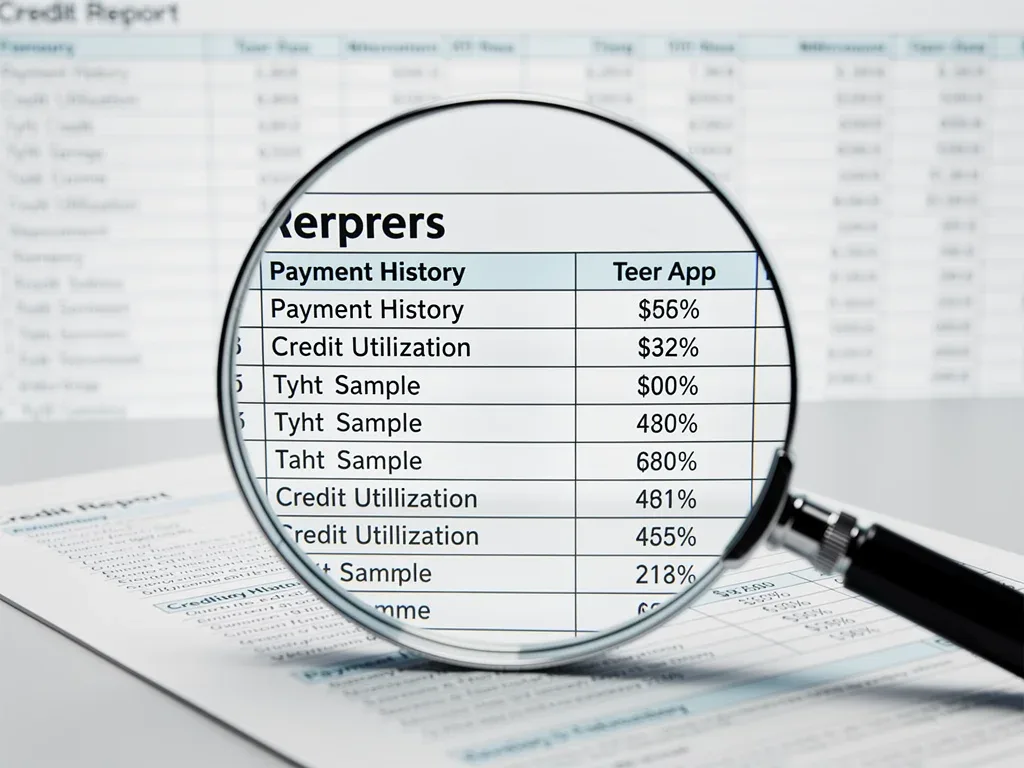
consumers with fluctuating debt levels
Individuals who frequently carry high credit card balances, even if they pay them down occasionally, might see a negative impact. The FICO Score 10 T model, with its emphasis on trended data, will detect these patterns of high utilization more prominently. If your balances consistently hover near your credit limits, even with minimum payments made, the model could interpret this as a higher risk.
This group includes those who use credit cards for large purchases and then take several months to pay them off, or those who frequently use balance transfers without significantly reducing their overall debt burden. The trend of increasing or consistently high debt will be a red flag, potentially leading to a score reduction.
those with limited credit history or recent improvements
Consumers with a relatively short credit history might also experience more noticeable shifts. Without a long trend of data to analyze, the model might be more sensitive to recent activities. For example, a new borrower who quickly accumulates debt could see a faster negative impact than under previous models.
On the other hand, individuals who have recently made significant improvements to their credit—such as drastically paying down debt or consistently making on-time payments after a period of struggles—could see a positive boost. The trended data will highlight these positive changes more effectively, rewarding consistent good behavior over the past 24 months. This means that recent efforts to improve your financial standing will be more visible and influential.
the interplay with other credit scoring models
It’s crucial to remember that FICO Score 10 T is just one of many credit scoring models used by lenders. While FICO is dominant, other models like VantageScore also play a significant role. Furthermore, within the FICO family itself, various versions (e.g., FICO Score 8, FICO Score 9) are still in use, often tailored to specific lending products. This creates a complex landscape where your creditworthiness might be viewed differently depending on which model a lender chooses to employ.
The introduction of FICO Score 10 T does not immediately render older models obsolete. Lenders transition at their own pace, and many will continue to use previous FICO versions, or even a blend of models, for some time. This means that while preparing for FICO Score 10 T is wise, maintaining overall good credit health across all facets of your financial life remains the best strategy.
FICO Score 10 T versus VantageScore
While both FICO and VantageScore aim to predict credit risk, they utilize different proprietary algorithms and may weigh factors differently. VantageScore models, for instance, are often more forgiving of medical collections and can score consumers with shorter credit histories. FICO Score 10 T’s emphasis on trended data is a significant differentiator, providing a more detailed historical perspective than some other models.
Consumers should understand that their FICO Score 10 T might differ from their VantageScore. This divergence can be confusing, but it highlights the importance of not relying on a single score. Instead, focus on the underlying principles of good credit management, which are generally consistent across all reputable scoring models.
lender adoption and future trends
The adoption of FICO Score 10 T by lenders will be a gradual process. Large financial institutions often have complex systems that require significant time and resources to update. Some lenders may prioritize adopting the new model for specific products, such as mortgages, while continuing to use older versions for others. This staggered adoption means that the full impact of FICO Score 10 T won’t be felt uniformly across the lending industry immediately.
Looking ahead, the trend in credit scoring is clearly towards more data-driven and nuanced assessments. Future models will likely continue to incorporate more sophisticated data points, potentially including open banking data or alternative data sources, to provide an even more comprehensive view of financial behavior. Staying informed about these evolving trends will be crucial for maintaining optimal credit health in an increasingly digital financial world.
strategies for maintaining excellent credit health
Maintaining excellent credit health is an ongoing process, and with the upcoming FICO Score 10 T update, it’s more important than ever to adopt robust strategies. A high credit score opens doors to better financial opportunities, from lower interest rates on loans to more favorable terms on insurance and housing. It signals to lenders and other institutions that you are a reliable and responsible financial steward.
The strategies for achieving and maintaining excellent credit are not revolutionary, but they require discipline and consistency. Focusing on these core principles will not only help you navigate the FICO Score 10 T changes but also build a strong financial foundation for your future.
core principles of credit management
At the heart of excellent credit health are a few fundamental principles:
- pay on time, every time: Payment history is the single most important factor in your credit score. Missing even one payment can have a significant negative impact. Set up automated payments or reminders to ensure you never miss a due date.
- keep credit utilization low: Aim to use less than 30% of your available credit on revolving accounts, and ideally even lower (under 10%). High utilization signals higher risk to lenders.
- maintain a long credit history: The longer your credit accounts have been open and in good standing, the better. Avoid closing old, unused accounts, as this can shorten your average credit age.
- diversify your credit mix: Having a healthy mix of different types of credit (e.g., credit cards, installment loans like mortgages or auto loans) can positively impact your score.
- limit new credit applications: Each hard inquiry for new credit can temporarily lower your score. Only apply for credit when genuinely needed.
Adhering to these principles consistently will establish the positive trended data that FICO Score 10 T is designed to reward, ensuring your credit profile remains strong.
leveraging technology for credit monitoring
In today’s digital age, leveraging technology can significantly aid in maintaining excellent credit. Numerous apps and online services offer free credit monitoring, allowing you to track your scores and reports from all three bureaus. These tools can provide real-time alerts for suspicious activity, helping you detect and address potential identity theft or errors quickly.
Furthermore, many banking and credit card apps offer insights into your spending patterns and credit utilization, making it easier to stay on top of your financial habits. Regularly reviewing these insights can help you identify areas for improvement and ensure you are consistently practicing good credit management. Technology serves as a powerful ally in your journey towards optimal credit health, providing the information and tools needed to make informed decisions and stay ahead of changes like the FICO Score 10 T update.
| Key Aspect | Brief Description |
|---|---|
| Trended Data Focus | FICO 10 T heavily emphasizes 24-month historical payment and balance trends. |
| Potential Score Shift | Scores could change by up to 15 points, impacting loan approvals and rates. |
| Debt Management | Consistent debt reduction and low utilization gain more importance. |
| Proactive Preparation | Monitor reports, pay on time, and reduce balances for optimal standing. |
frequently asked questions about FICO Score 10 T
What is the main difference with FICO Score 10 T?▼The primary difference in FICO Score 10 T is its enhanced focus on “trended data.” This means it analyzes your credit behavior over a 24-month period, looking at patterns in your payments and credit utilization, rather than just a snapshot of your current credit standing. This aims for a more predictive risk assessment.
How much could my score change with FICO Score 10 T?▼Individual scores could see a shift of up to 15 points, either positively or negatively. This change is significant because even small adjustments can move you into different credit tiers, affecting loan interest rates and approval chances. Proactive credit management is key to navigating these shifts.