Optimize Your Credit Mix by 2026: Boost Your Score 20 Points

Advertisements
Optimizing your credit mix by 2026 is crucial for significant credit score improvement, potentially boosting it by 20 points through strategic diversification of credit accounts, including installment and revolving credit, to demonstrate responsible financial management.
Are you looking to elevate your financial standing and open doors to better lending opportunities? Understanding and actively working on optimizing your credit mix by 2026 can be a game-changer, potentially increasing your credit score by 20 points or more. This guide will walk you through the essential strategies for diversifying your accounts, ensuring you’re well-prepared for a stronger financial future.
Understanding the Credit Mix Component
The credit mix, often overlooked by many, constitutes approximately 10% of your FICO score, a significant enough portion to warrant strategic attention. It reflects the variety of credit accounts you manage, showcasing your ability to handle different types of debt responsibly. Lenders view a diversified credit portfolio as a sign of financial maturity and lower risk.
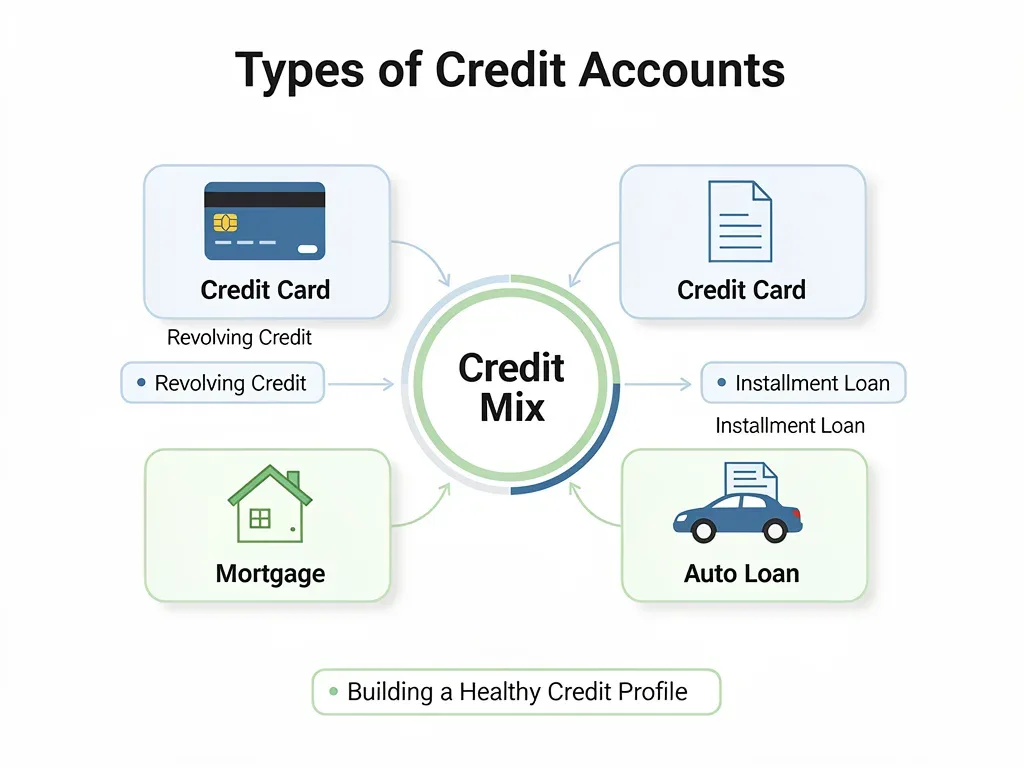
A healthy credit mix typically includes both revolving credit, such as credit cards, and installment credit, like mortgages, auto loans, or student loans. The presence of both types indicates that you can manage various financial commitments, which is a positive signal to credit bureaus and potential lenders. It’s not just about having different accounts, but managing them effectively.
What is revolving credit?
Revolving credit accounts allow you to borrow up to a certain limit, repay the amount, and then borrow again. The key characteristic is that the credit line replenishes as you pay down the balance. This type of credit offers flexibility but requires disciplined management to avoid high balances and interest charges.
- Credit cards: The most common form of revolving credit, offering convenience and rewards.
- Home equity lines of credit (HELOCs): Allow homeowners to borrow against their home’s equity.
- Personal lines of credit: Flexible credit offered by banks, often unsecured.
What is installment credit?
Installment credit involves a fixed loan amount repaid over a set period with regularly scheduled payments. Once the loan is paid off, the account is closed. This demonstrates your ability to commit to and fulfill long-term financial obligations.
- Mortgages: Loans used to purchase real estate, typically repaid over 15 to 30 years.
- Auto loans: Financing for vehicle purchases, usually with terms from 3 to 7 years.
- Student loans: Funds borrowed for educational expenses, often with deferred payments until after graduation.
Successfully managing both revolving and installment accounts shows versatility in handling debt, which can significantly contribute to optimizing your credit mix and boosting your overall credit score. The goal is to demonstrate responsibility across different credit products, not just accumulate them.
The Impact of Diversified Accounts on Your Credit Score
Having a mix of credit accounts demonstrates to lenders that you are capable of managing various financial responsibilities. This diversity is not just about quantity but about quality and responsible usage. When you successfully manage different types of credit, it paints a picture of a financially savvy individual, which is highly valued by credit scoring models.
For example, someone with only credit cards might be seen as less experienced in managing long-term debt compared to someone who also has a car loan or a mortgage. The credit bureaus interpret the successful handling of different credit types as a lower risk factor. This is why focusing on optimizing your credit mix is a direct pathway to a higher credit score.
How credit bureaus view diversification
Credit bureaus like Experian, Equifax, and TransUnion analyze your credit report to build your score. They look for patterns of responsible behavior across all your accounts. A diverse mix suggests that you are not overly reliant on one type of credit and can handle various financial obligations simultaneously.
- Demonstrates financial stability and responsibility.
- Indicates experience with both short-term and long-term debt.
- Can mitigate the impact of high utilization on a single type of credit.
Boosting your score by 20 points
While the credit mix component is 10% of your FICO score, improving it can have a ripple effect on other components, indirectly leading to a more substantial increase. For instance, successfully managing a new installment loan will also positively impact your payment history, which accounts for 35% of your score.
By strategically adding and managing new types of credit, you can see noticeable improvements. For someone with a good payment history but a limited credit mix, the addition of a well-managed installment loan could be the catalyst for a 20-point jump. It’s about filling in the gaps in your credit profile and demonstrating comprehensive financial management.
The key is not to open new accounts haphazardly. Each new account, whether revolving or installment, should be a strategic decision aimed at strengthening your overall credit profile. This thoughtful approach ensures that your efforts in optimizing your credit mix translate into tangible score improvements.
Strategic Approaches to Diversify Your Credit Portfolio
Diversifying your credit portfolio doesn’t mean opening every credit product available. It involves a thoughtful and strategic approach, considering your current financial situation and future goals. The aim is to introduce new types of credit responsibly, ensuring they contribute positively to your credit score rather than becoming a burden.
One primary strategy is to consider your existing credit profile. If you only have credit cards, exploring an installment loan might be beneficial. Conversely, if you have several installment loans but no revolving credit, a carefully managed credit card could be the answer. The balance is key.
Considering a secured loan or credit builder loan
For those with a limited credit history or those looking to safely introduce installment credit, secured loans or credit builder loans are excellent options. These loans are specifically designed to help individuals build or rebuild their credit without significant risk.
- Secured Loans: Backed by collateral, making them less risky for lenders and easier to obtain. Examples include secured personal loans or secured credit cards.
- Credit Builder Loans: The loan amount is held in a savings account while you make payments. Once the loan is paid off, you receive the funds. This builds both credit and savings.
Adding a new type of revolving credit
If your credit profile heavily leans towards installment loans, consider adding a new revolving credit account. A responsibly managed credit card can show your ability to handle flexible credit lines. However, be mindful of your credit utilization ratio, keeping it below 30%.
When selecting a new credit card, look for one that aligns with your spending habits and offers benefits you’ll use. Avoid applying for too many cards at once, as multiple hard inquiries can temporarily lower your score. The goal is to add a single, well-managed account that complements your existing credit.
Ultimately, the best strategy for optimizing your credit mix is one that is tailored to your individual financial situation. It requires careful planning, responsible management, and a clear understanding of how each credit product impacts your overall credit health. By 2026, a well-executed strategy can lead to significant score improvements.
Managing New Accounts for Maximum Credit Score Impact
Acquiring new credit accounts is only the first step in optimizing your credit mix. The real impact comes from how you manage these accounts over time. Proper management is crucial to ensure that these additions contribute positively to your credit score, rather than becoming a detriment. Consistency and discipline are paramount.
Every payment, every balance, and every inquiry is reported to credit bureaus, shaping your credit profile. Therefore, a proactive approach to managing new accounts is essential for maximizing their positive effect on your credit score by 2026. This includes understanding payment cycles, interest rates, and credit limits.
Making timely payments a priority
Payment history is the most significant factor in your credit score, accounting for 35%. This makes timely payments on all your accounts, especially new ones, absolutely critical. Even a single missed payment can significantly hurt your score and undermine your efforts to diversify your credit mix.
- Set up automatic payments: This ensures you never miss a due date.
- Pay more than the minimum: Reduces interest and pays down debt faster.
- Monitor due dates: Keep track of all payment schedules to avoid surprises.
Maintaining low credit utilization
For revolving credit accounts, your credit utilization ratio (the amount of credit you’re using compared to your total available credit) plays a vital role. Keeping this ratio low, ideally below 30%, demonstrates responsible credit usage and positively impacts your score.
Even with new credit cards, resist the temptation to max them out. Use them strategically for small purchases you can pay off quickly. This shows active account usage without incurring high debt. Your ability to manage new credit responsibly directly translates into a stronger credit profile and higher scores.
Effective management of new credit accounts is a continuous process that demands attention and discipline. By consistently making timely payments and maintaining low utilization, you reinforce positive credit behaviors that are essential for optimizing your credit mix and achieving your credit score goals.
Monitoring Your Credit Health and Progress Towards 2026
Regularly monitoring your credit health is as important as implementing strategies to diversify your credit mix. Without consistent oversight, it’s difficult to assess the effectiveness of your efforts or identify potential issues before they escalate. This ongoing vigilance ensures you stay on track to reach your credit score goals by 2026.
Think of it as a financial check-up. Just as you monitor your physical health, your financial health requires similar attention. Free credit reports and scoring services are readily available, making it easier than ever to keep an eye on your progress.
Utilizing free credit reports and scores
The law entitles you to a free credit report from each of the three major credit bureaus (Experian, Equifax, and TransUnion) once every 12 months via AnnualCreditReport.com. These reports provide a detailed overview of your credit history, including all accounts, payment history, and inquiries.
- Review for errors: Discrepancies can negatively impact your score; dispute them immediately.
- Track new accounts: Ensure all new accounts are reported accurately.
- Identify potential fraud: Unauthorized accounts or inquiries can be a sign of identity theft.
Understanding credit score changes
Your credit score is dynamic, fluctuating based on your credit activity. When you make strategic changes, such as adding a new installment loan, you might see a temporary dip due to a hard inquiry, followed by a gradual increase as you demonstrate responsible payments.
It’s important not to get discouraged by minor fluctuations. Focus on the long-term trend. If you’re consistently making timely payments, keeping utilization low, and managing a diversified mix, your score will trend upwards. Many credit card companies and banks now offer free credit scores, providing easy access to your progress.

By actively monitoring your credit health, you gain valuable insights into how your actions affect your score. This empowers you to make informed decisions and adjust your strategies as needed, ensuring that your journey to optimizing your credit mix culminates in a significantly improved credit score by 2026.
Common Pitfalls to Avoid When Diversifying Credit
While the goal of optimizing your credit mix is to improve your financial standing, there are several common pitfalls that can undermine your efforts. Being aware of these traps can help you navigate the process more effectively, ensuring that your actions lead to a positive impact on your credit score rather than unintended negative consequences.
It’s easy to get carried away with the idea of diversification, but a thoughtful and cautious approach is always best. Rash decisions or a lack of understanding can quickly turn a beneficial strategy into a detrimental one, setting back your progress towards a higher credit score by 2026.
Opening too many new accounts too quickly
While adding new account types is part of diversification, opening too many accounts in a short period can be detrimental. Each new credit application typically results in a hard inquiry on your credit report, which can temporarily lower your score. A cluster of inquiries signals higher risk to lenders.
- Space out applications: Wait at least 6 months between applications for new credit.
- Assess necessity: Only open accounts you genuinely need and can manage.
- Avoid impulse applications: Resist offers that don’t align with your diversification strategy.
Taking on unnecessary debt
The purpose of diversifying your credit mix is not to accumulate more debt. It’s about demonstrating your ability to manage different types of credit responsibly. Taking on loans or credit cards you don’t need or can’t afford to repay can quickly lead to financial strain and missed payments, severely damaging your credit.
Before applying for any new credit, carefully consider whether it fits into your budget and long-term financial plan. A small, manageable secured loan or a credit-builder loan is often a better starting point than a large, unsecured personal loan if your primary goal is credit diversification.
Avoiding these common pitfalls is crucial for a successful credit diversification strategy. By being patient, disciplined, and strategic in your approach, you can ensure that your efforts to optimize your credit mix contribute positively to your credit score, helping you achieve your financial goals by 2026.
Long-Term Benefits of an Optimized Credit Mix
The immediate goal of optimizing your credit mix might be to increase your credit score by 20 points, but the benefits extend far beyond a numerical improvement. A well-diversified and responsibly managed credit profile lays the foundation for significant long-term financial advantages, impacting various aspects of your life well into the future.
By 2026, an optimized credit mix will not only reflect a higher credit score but also a stronger financial reputation, opening doors to opportunities that might otherwise be inaccessible. This proactive approach to credit management is an investment in your future financial health and stability.
Access to better interest rates and loan terms
A higher credit score, bolstered by a strong credit mix, makes you a more attractive borrower to lenders. This often translates into lower interest rates on mortgages, auto loans, and personal loans, saving you thousands of dollars over the life of these debts. Better terms can also include lower fees and more flexible repayment options.
- Significant savings on interest payments over time.
- Eligibility for preferred customer rates and exclusive offers.
- Greater flexibility and negotiation power when seeking new credit.
Improved financial flexibility and opportunities
Beyond just loans, a strong credit score stemming from an optimized credit mix can influence other areas of your financial life. Landlords often check credit scores, and a good score can make it easier to secure rental properties. Some employers also review credit reports, especially for positions involving financial responsibility, seeing it as an indicator of reliability.
Furthermore, you might qualify for premium credit cards with superior rewards programs, travel perks, and enhanced consumer protections. This increased financial flexibility allows you to pursue larger financial goals, such as buying a home, starting a business, or investing, with greater ease and more favorable conditions.
Ultimately, optimizing your credit mix is about building a robust financial foundation. It’s a strategic move that not only improves your credit score in the short term but also unlocks a world of financial opportunities and security, ensuring a more prosperous financial outlook for 2026 and beyond.
| Key Point | Brief Description |
|---|---|
| Credit Mix Importance | Accounts for ~10% of your FICO score, demonstrating ability to manage diverse debt types. |
| Diversification Strategy | Balance revolving (credit cards) and installment (loans) credit responsibly. |
| Account Management | Timely payments and low utilization are crucial for positive score impact. |
| Long-Term Benefits | Access to better rates, increased financial flexibility, and enhanced opportunities. |
Frequently Asked Questions About Credit Mix Optimization
What exactly is a ‘credit mix’ and why is it important for my score?▼A credit mix refers to the variety of credit accounts you manage, including both revolving credit (like credit cards) and installment loans (such as mortgages or auto loans). It’s important because it demonstrates your ability to responsibly handle different types of debt, influencing about 10% of your FICO score and signaling lower risk to lenders.
How can diversifying my credit accounts increase my score by 20 points?▼By strategically adding and responsibly managing a mix of credit types, you show lenders you’re adept at handling various financial obligations. This positive behavior enhances your credit mix component and can indirectly improve other factors like payment history, collectively leading to a noticeable score increase, potentially up to 20 points or more.
What are the safest ways to add new credit to diversify my mix?▼Consider starting with secured loans or credit-builder loans, which are designed to help establish or improve credit safely. If you already have installment loans, a single, responsibly managed credit card with low utilization can be beneficial. Avoid opening too many accounts simultaneously to prevent multiple hard inquiries from negatively impacting your score.
Are there any risks I should be aware of when trying to optimize my credit mix?▼Yes, key risks include opening too many new accounts too quickly, which can lead to multiple hard inquiries and a temporary score drop. Additionally, taking on unnecessary debt you cannot comfortably repay will result in missed payments and increased utilization, significantly harming your credit score rather than improving it.
How often should I check my credit report and score when optimizing my credit mix?▼It’s advisable to check your credit reports from all three major bureaus at least once a year through AnnualCreditReport.com to ensure accuracy and monitor new accounts. Many credit card providers and banks offer free credit scores, which you can check more frequently, perhaps monthly, to track your progress and identify any changes.
Conclusion
The journey to optimizing your credit mix by 2026 is a strategic endeavor that promises substantial returns in the form of a higher credit score and enhanced financial opportunities. By understanding the nuances of revolving versus installment credit, carefully introducing new accounts, and diligently managing them with timely payments and low utilization, you can significantly bolster your credit profile. This proactive approach not only aims for a 20-point score increase but also builds a resilient financial foundation, paving the way for better interest rates, increased flexibility, and greater peace of mind in your financial future.